
What is Kyo-nui… What is Nagakusa…
We are here to tell the history, materials,
and techniques that Nagakusa has accumulated.
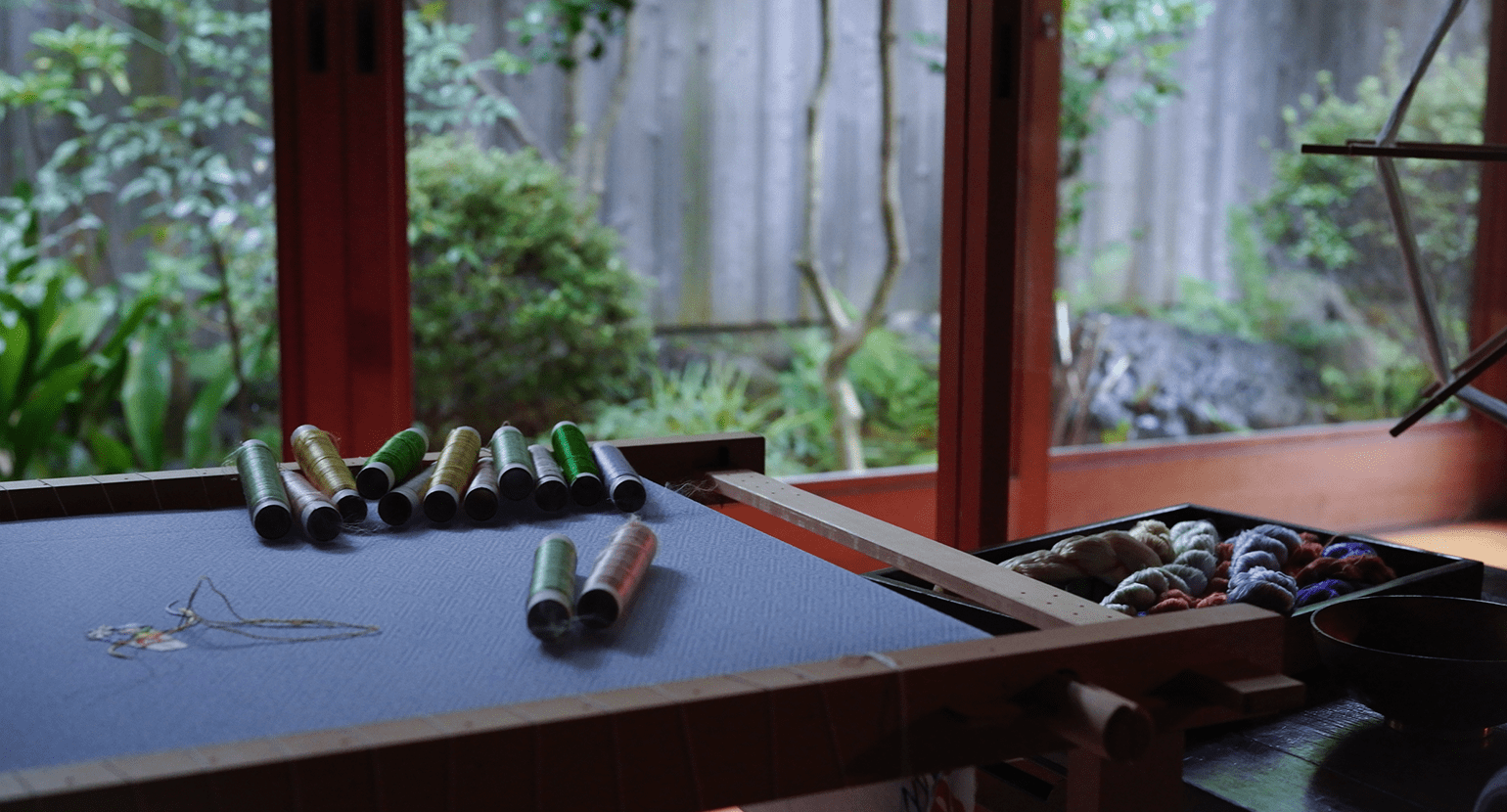
京繍Kyo-nui
It is said that the history of Kyo-nui began in the Heian period (794-1185) with the appointment of Nuibe no Tsukasa (a governmental branch responsible for producing government-furnished sewn products) in the capital.
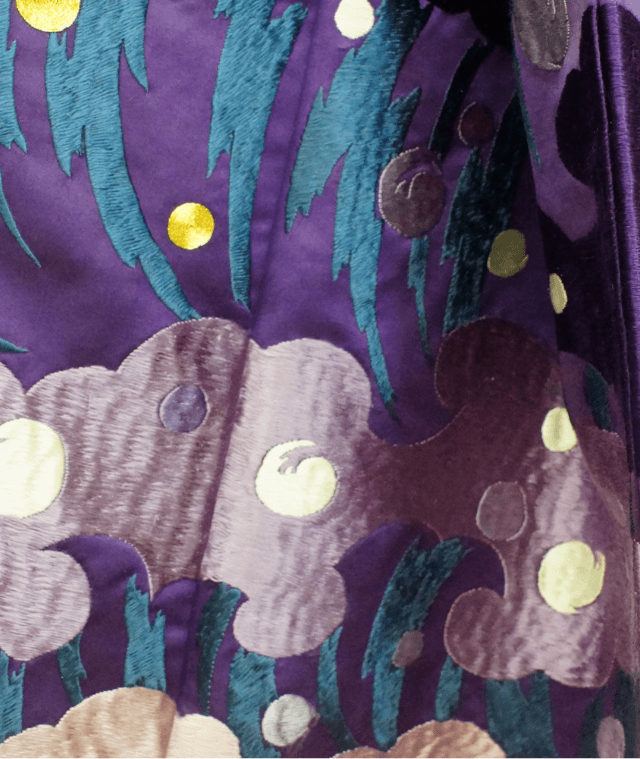
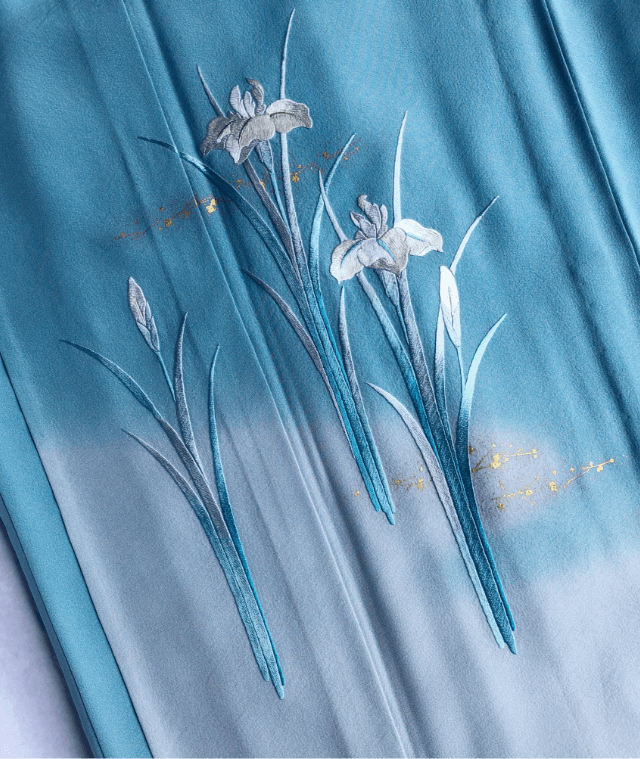
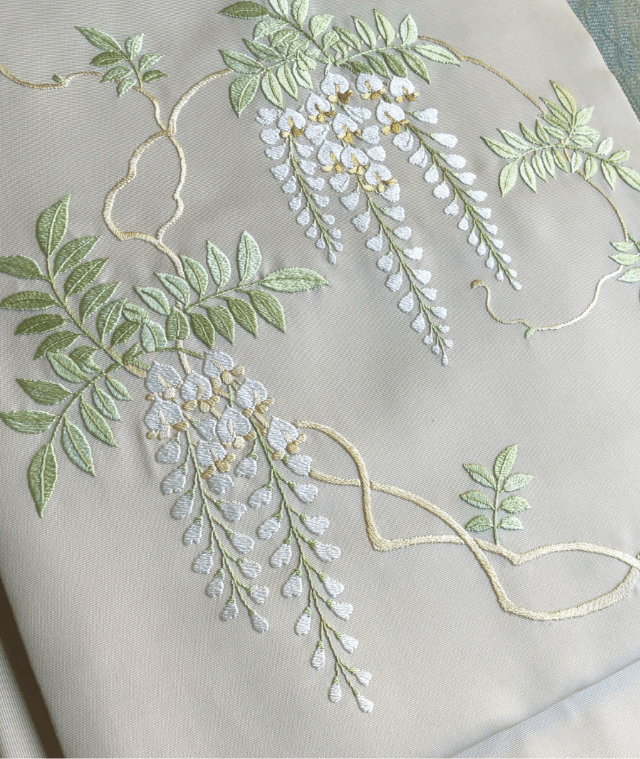
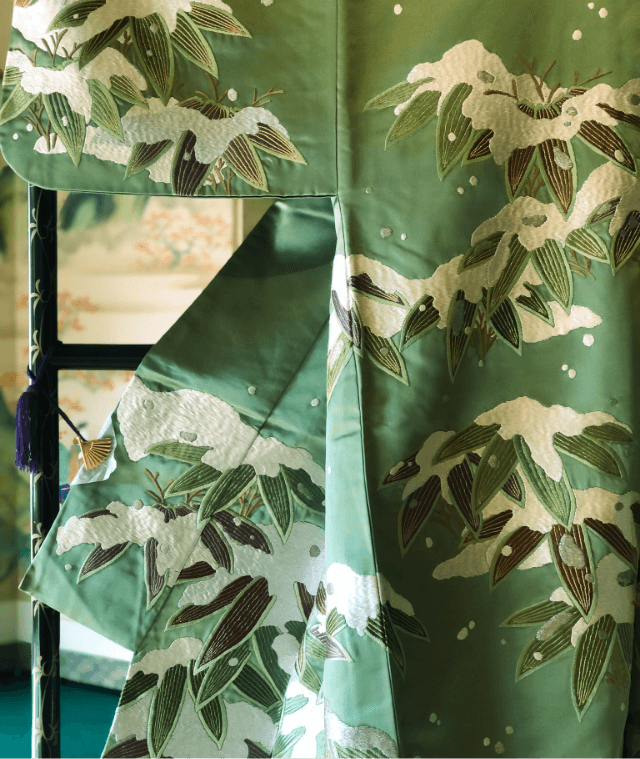
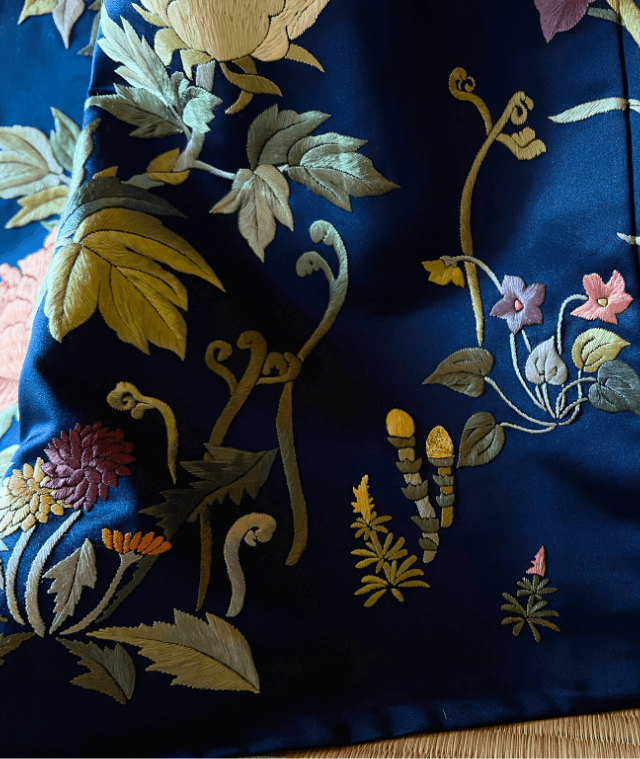
It is a craft in which embroidery is applied to suitable fabrics using a variety of techniques, such as “Shu-butsu”, an embroidered Buddhas, and traditional banners called “Hata” in the Kamakura period (1185–1333), Noh costumes in the Azuchi-Momoyama period (1568-1600), and “kosode” sleeves in the Edo period (1603-1868). Today, Kyo-nui is highly valued as a work of art for its sophisticated techniques and artistic quality.
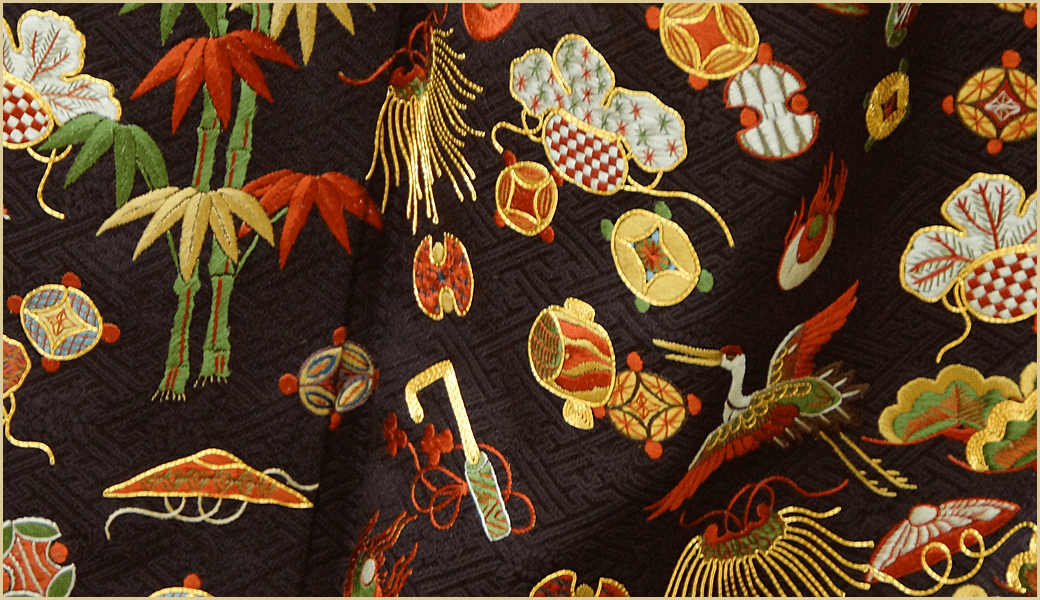
“Kyo-nui” is one of the traditional crafts designated by Japanese law.
It is a production in which a traditional craftsman, recognized by the Japanese government, twists silk threads with both hands and embroiders them with both hands on silk or linen fabric. Embroidery techniques alone cannot produce the craft. The craftsman can start working on embroidery only after drawing a design, copying it onto the fabric, selecting the best color threads for the embroidery from thousands of colors, and stretching the fabric over an embroidery table. Each process requires sophisticated skills, and it takes a long time to be recognized as a craftsman (Currently, there are 32 traditional craftsmen in Japan)
Like many countries, Japan has a long tradition of embroidery. There are various theories, but it is believed to have originated roughly from ancient China.
It was first made in Nara, the ancient capital of Japan. Mainly using Buddhist motifs, hanging scrolls and large curtains (called tobari) were made. The oldest piece of embroidery remaining in Japan today is a scrap of a large tobari curtain called “Tenjukoku Shucho,” which was made in memory of Prince Shotoku. When the capital moved from Nara to Kyoto at the beginning of the era called the Heian period (794-1185), the government created the “Nuibe no Tsukasa,” a branch responsible for producing embroidered products. “Kyo-nui” is an abbreviation for “embroidery of Kyoto,” so the origin of “Kyo-nui” refers to the period when the government moved to Kyoto. What was being made during the Heian period is actually not certain. Although many embroideries from before and after this period have survived, only a few embroideries from the Heian period have survived to this day. It is believed from the documents that many of the items were probably created at the request of the royal family, aristocrats, temples, and shrines.
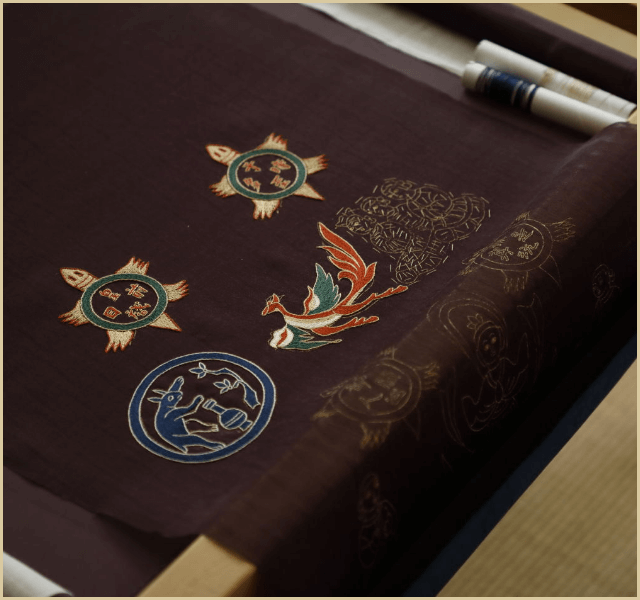
Research and reproduction of Japan’s oldest Embroidery work
“Tenjukoku shuchou”
In the Kamakura period (1185-1333), the main culture was changed from the nobles to the warriors. Therefore, scrolls with motifs of Gods and Buddha to pray for the warriors to win the war, Buddhist scrolls to comfort the dead, and ornaments to decorate Buddhist temples were created. Many embroidered items from this period have hair from the people who requested to make, which was used in place of thread to show their devotion to the Buddha. It can be said that it was a time when Buddhism gained faith from the upper classes to the ordinary people.
In the following Azuchi-Momoyama period (Muromachi period), many theatrical arts appeared. In one of the arts “Noh,” stage costume called “Nuihaku” which combines embroidery and foils (gold and silver) was often used along with the costume called “Karaori,” an exquisite outer kimono for women. It is believed that embroidery began to be used as a symbol of luxurious decoration. Because until then, the only people who embroidered their clothing were presumably the royal family or a few aristocrats. In the Edo period (1603-1867), embroidered kimonos were worn not only by the royal family and aristocrats but also by feudal lords and wealthy people. Notable examples include the “Genroku kosode,” which is embroidered luxuriously to emphasize the beauty of women, like a party dress in modern times. The designs and embroidery techniques have greatly influenced the production of today’s kimono.
In the modern Meiji period (1868-1912), with the shift from kimono to Western-style clothing, many embroideries were produced as frame decorations and crafted items for export to Europe. From this time, the embroidery was traded around the world as a luxury art. Also, kimonos, stage costumes, sumo wrestler’s make-up mawashi, and festival curtains (tapestries) remained as embroidery work from the Edo period.
Although many objects and techniques were lost in the two world wars, those involved in Kyo-nui have continued to pass on the art and culture of embroidery in Kyoto for more than 1,200 years.
Please note that it may take some time for us to reply to you depending on the contents.
